Country music is having a moment. Beyoncé has Cowboy Carter, Chappell Roan has The Giver, and Morgan Wallen has more songs on the charts than seems conscionable in the eyes of God. Five out of eighteen musical guests in the most recent 50th season of SNL were country artists, up from two in season 49 and one in season 48. On TV, radio, and TikTok (I'm told), 2025's flavor of country music is everywhere.
Despite this success, it feels a little crazy to say that country music is only now having a moment. You could argue that country music is always riding the crest of one wave or another. The 2010s had Kacey Musgraves and Chris Stapleton; the 2000s, the Chicks and country-era Taylor Swift; the '90s, Garth Brooks and Shania Twain. What we're seeing today may just be another generation of pop-country crossover hits in a family tree stretching back to (at least) Glen Campbell and Dolly Parton in the 1970s.
Still, something about this moment feels different:
First, rather than country artists crossing over into mainstream success, we're seeing here (at least with Beyoncé and Roan) mainstream pop artists crossing over into country music (or at least the country aesthetic). This pattern also applies to the music itself: Shaboozey made a mega-hit by reworking J-Kwon's "Tipsy" in the country image; the same holds (with a more subtle transformation) for Beyoncé's rendition of "Blackbiird".
Second, many of these artists represent identities traditionally marginalized in mainstream country - Black, queer, or both.
This all adds up to a strange combination of the mainstream and the marginalized, overlaid in the trappings of country music. It's a curious moment when someone like Beyoncé, with an enormous amount of mainstream success, can again represent an "alternative" option against the usual white, male backdrop of country music.
This tension raises the question of what "alternative country" looks like in 2025. The outlaw country of the '80s kicked back against the crooning, strings, and clean cut image of the Nashville sound. The alt-country of the '90s did the same for the increasingly commercialized, pop and rock tinged "new country" of Garth Brooks and Shania Twain. But in 2025, what trend is there to buck? If today's radio hits are lesbian line dances, then what box is there for unorthodox country music to exist outside?
One template for what new alternative country could look like is misfit country. Misfit country isn't radical in its message or intent - it's radical in its texture; in its soul. It doesn't subvert, it permeates. Where mainstream country music is about glitz, polish, and generalization, misfit country is about the realization of stories - the recombination of broken bits of barroom glass into something whole.
More than anything, misfit country is freak music, made by the freaks who aren't unwilling to have a hit - just unable. It's weird, and fun, and stretches through time. It's the country music your great aunt is listening to while she dances in the kitchen in your memory. Misfit country is most certainly not a movement, or a genre, but there is a pattern there that you can just begin to pick up at the edges.
To that end, here are five examples of what misfit country sounds like to me:
Lucinda Williams - Car Wheels on a Gravel Road (1998)
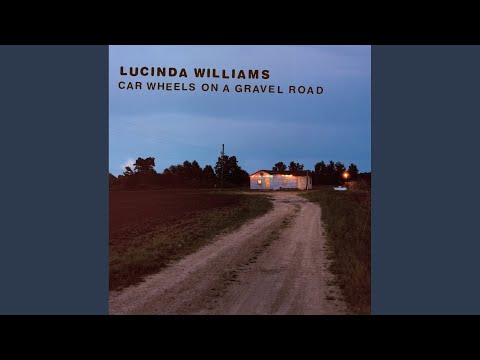
While Lucinda Williams' entire 1998 masterpiece listens like an eerie, radio-static vision of the south, it's the title track which is most deserving of the label of misfit country. The first verse places us squarely in a house that feels haunted by memory:
Sittin' in the kitchen, a house in Macon
Loretta's singing on the radio
Smell of coffee, eggs, and bacon
Car wheels on a gravel road
I refuse to believe that anyone who grew up in the rural south isn't instantly transported by these lines. The power here is that these lyrics don't just take me back to my own childhood - they also call forth the ghosts of my father's youth, and my grandmother's before that. They layer on five decades like five coats of paint, and in doing so capture a fundamental truth of the south: the past is always just a scratch below the surface.
I remember listening to this song in the car, on the gravel road, when I was a kid, and wondering who it was who was coming up Lucinda's drive. Or were they leaving? Her inimitable drawl invites you to see, rather than hear, the answer to the mystery. I adore it.1
Jerry Garcia - Mississippi Moon (1974)
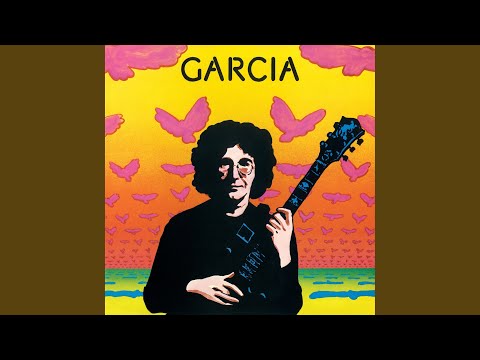
If "Car Wheels on a Gravel Road" is a grainy polaroid of the south, then "Mississippi Moon" is an impressionist's oil painting. In this tune from 1974's Compliments... (penned by Peter Rowan of the New Riders of the Purple Sage), Garcia's warbling tenor laments over the wistful backdrop of a clarinet quintet. This track proves that misfit country doesn't have to sound much like country - there's not a pedal steel in sight.
The song's images are as delicate as they are beautiful: a "wild bird that wanders", a "whirlwind on the sand". Again, the song is spectral, and steeped in a quiet atmosphere of mystery and loss. Who is Corey? What fate has befallen them? How long have we been trying to reach them? The "soon" of the chorus feels less like a promise and more like an ominous echo, heard whispering through the pines.
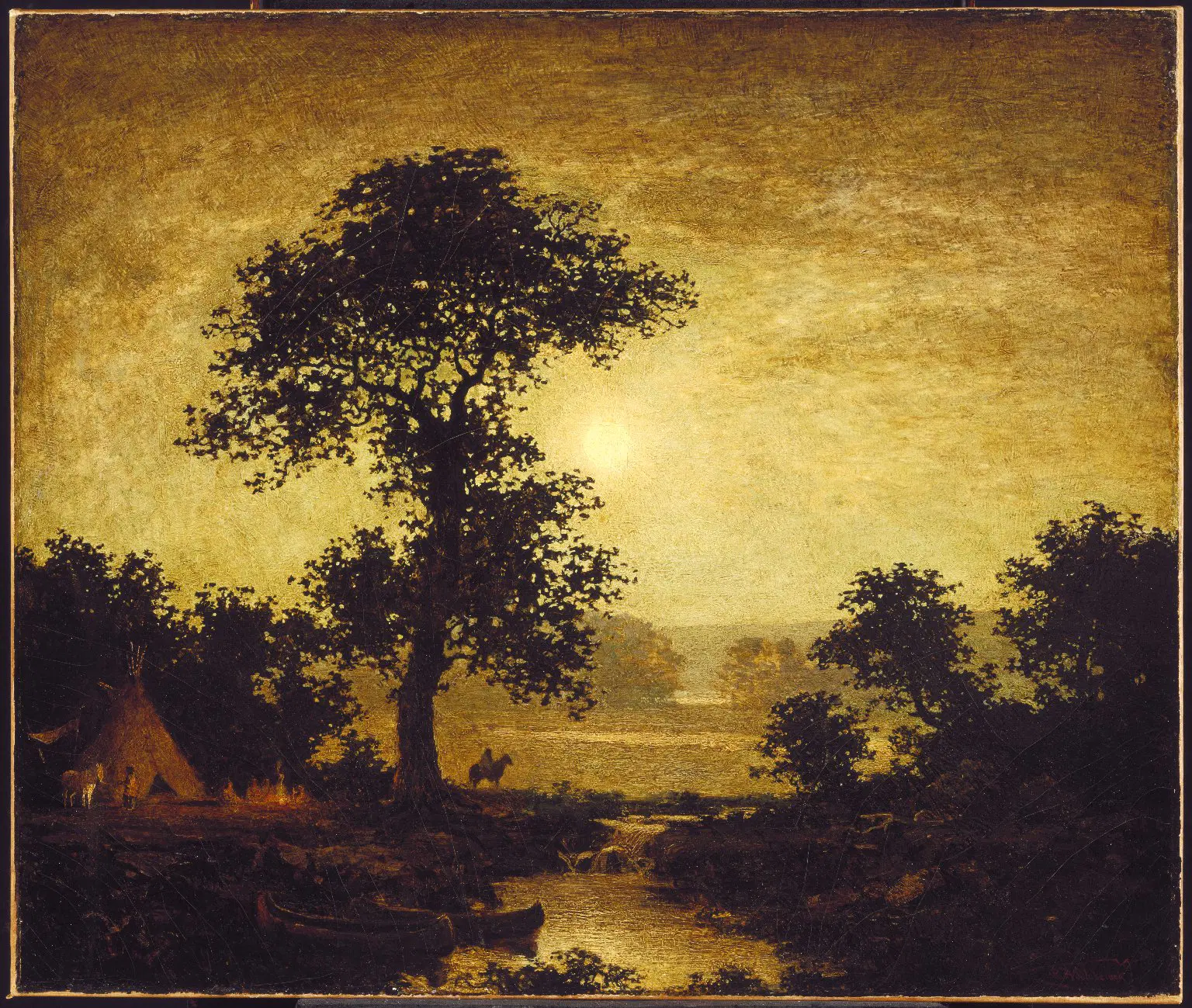 Garcia's pines call to my mind this Blakelock painting - not quite Mississippi, but the same eerie vibe.
Commander Cody and His Lost Planet Airmen - Seeds and Stems (Again) (1971)

This next number leans away from the spooky mystery of the first two tracks and into the mischievous side of misfit country. Like the funhouse mirror image of your standard, aching country ballad, this song traces the haplessness of its protagonist to comic excess in the climactic final verse:
Well, my dog died just yesterday and left me all alone
The finance company dropped by today and repossessed my home
That's just a drop in the bucket compared to losing you
And I'm down to seeds and stems again, too
God, things are looking bleak! But the magic of this song is that it doesn't treat this excess as a punchline. While the tragicomedy of Commander Cody here is inherently absurd, the tinkling barrelhouse piano and mournful pedal steel nevertheless have a real pull on our heartstrings. All together, it captures exactly how hilariously sad it can feel when everything is going wrong, and the losses just keep stacking up.
Although, in the era of almost universally legal weed, I don't think most folks are getting down to seeds and stems anymore...
Townes Van Zandt - Don't Let The Sunshine Fool Ya' (1972)
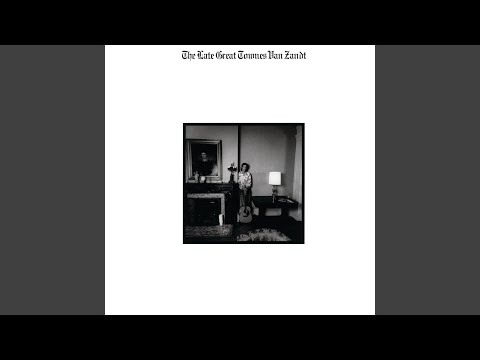
The idea of "fun in the face of danger" is an essential component of misfit country - it's not here just to weep and bemoan the hard times we've fallen on, but also to look forward to the good times with a cigarette in our lips, a half-smile on our face, and a chuckle at the expense of whatever creator made things so tough. Few artists capture this balance between desolation and jubilation better than Townes Van Zandt, and few examples of his work do as well as his rendition of Guy Clark's "Don't Let the Sunshine Fool Ya'".
While the tune of the song is cheery, the lyrics are a warning: we shouldn't let the sunshine fool us into thinking that the days to come will be bluebirds and happiness. But this advice isn't delivered with spite, but rather with a smile. Even if things go south, just "put your hand in mine," and maybe we'll get a slice of that rainbow pie. There's no reason in the world that we can't get by!
Again, this crooked but functional dissonance between these two emotions is a defining characteristic of misfit country. While a more mainstream song may need to fit in just one bucket - "sad" or "triumphant" or "vengeful" - Townes here can toe the line with cheery melancholy. Even his bleakest songs are tinged with triumph ("Waiting Around to Die"), and his loveliest songs tinged with loss ("I'll Be Here in The Morning"). Townes lived and died as a true misfit, and could easily take up a hundred spots on this playlist.
The Byrds - Hickory Wind (1968)

It would be wrong to make a playlist of misfit country songs and not include Gram Parsons and the Byrds. 1968's Sweetheart of the Rodeo is a masterpiece that did for alternative country what The Velvet Underground & Nico did for indie rock. This album injected the psychedelia of the '60s into country music and made it cool, strange, and alive. But, impressively, it did so without sacrificing quality or tradition. Somehow, the Byrds were able to make a country album that simultaneously was infuriating to the Nashville music establishment and harkened back to the classic country sounds of the Carter Family and Merle Travis.
In that vein, the greatest compliment I can give to "Hickory Wind" is that it fits in perfectly with the traditional songs and country standards on the album. It sounds as though it could have been written in 1925, 1965, or 2025. It is unquestionably included in my copy of the Great American Songbook. It is a classic.2
Just listen to it. Please!
Coda
Now, these five songs don't represent the entirety of misfit country - in fact, they only begin to trace its outlines. You might think that the pattern is hard to see - that these tracks don't fit cleanly together - but to me, that's the whole point. It's not that Lucinda Williams is making the same kind of music as Jerry Garcia, or Gram Parsons, or Uncle Tupelo, or Wednesday. Instead, it's like each of these artists is one little piece of glass in a broken mirror, reflecting back a specific and unique angle of what country music - that is, the south, heartbreak, substance abuse, celebration, labor, ... - has meant to them.
In this way, misfit country isn't something that you can set out to make. It's what happens when an artist takes the most personal possible approach to writing that old standard for the great country song: three chords and the truth.